2024 Return: 68.64% (Max drawdown: approx. −46%)
Cumulative benchmark comparison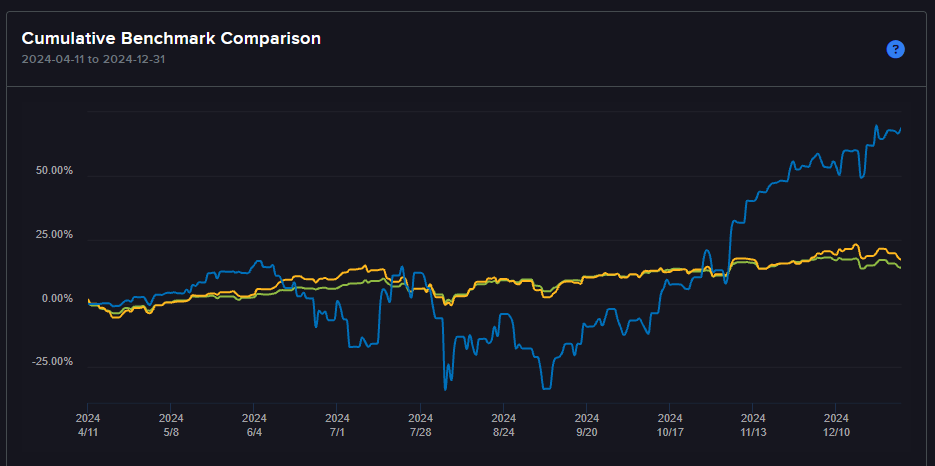
Options Trading
A pragmatic starting point: which broker gives access to real exchange-listed options, how listed options differ from warrants, and what infrastructure you need before the first trade.
As explained in my introduction, I have been involved with financial markets for around 20 years. Especially at the beginning, I tried many different approaches. Only after I began following a clear plan was I able to improve step by step.
Since around 2018, my average return has been approximately 30% per year. A substantial part of that return, however, came from a Bitcoin and Ethereum position that I opened during the COVID crash. Only after my portfolio had reached a certain size did I begin studying options seriously. They immediately fascinated me, and since then I have focused almost exclusively on options trading.
The results are strong, but 2024 and 2025 were exceptionally bullish market years. The high returns shown in the charts below are therefore not representative. I have already experienced several drawdowns and have a plan B for more difficult market environments.
Note: I did not trade my first option until April 11, 2024, so the 2024 trading year shown here is incomplete.
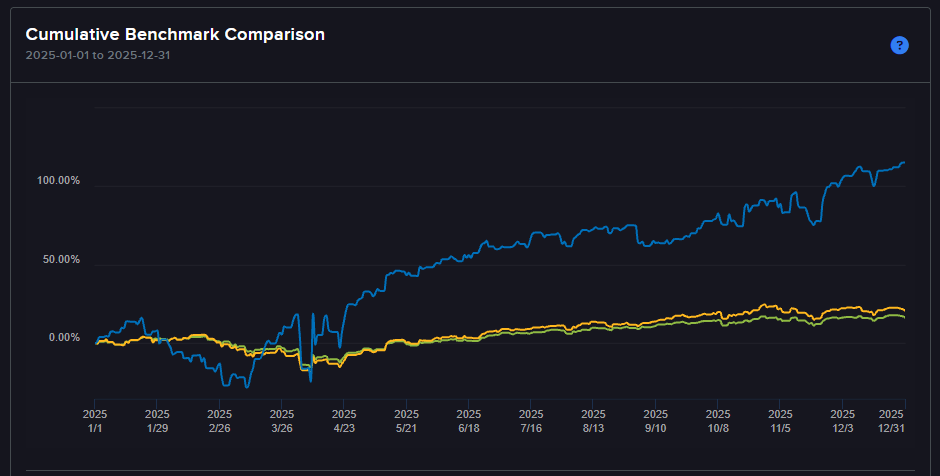
Important: Past performance does not guarantee future results. These charts provide personal context only and are neither a promise of returns nor investment advice. The stated maximum drawdowns are approximate readings from the displayed curves.
The first step is not the first strategy. It is the right infrastructure. If you want to trade real exchange-listed options, you need a broker that actually provides access to listed options markets. For traders in Germany and the EU, this distinction matters.
Typical German neo-brokers such as Trade Republic or Scalable Capital can be useful for stocks, ETFs, savings plans and simple derivatives. For classic options trading, however, they are usually not enough because they mainly offer warrants, knock-outs or certificates. These are issuer products, usually created by a bank, and are not the same as exchange-listed options.
The difference is practical: with warrants you are typically the buyer of a structured product. You can speculate on rising or falling prices or hedge an existing position. But if you want to act as an option seller, collect premium and build short-option strategies, you need direct access to exchange-listed options.
For many private options traders in Germany, Interactive Brokers is one of the best-known routes. Depending on permissions, clients can trade stocks, options, futures, futures options, commodities, currencies and bonds. The fee structure is often competitive compared with traditional banks, especially for options and futures.
For regulatory purposes, EU clients are typically onboarded through Interactive Brokers Ireland. This entity is based in the EU and regulated by the Central Bank of Ireland. That is not the same as direct supervision by BaFin, but it is a regulated EU brokerage entity available to clients in Germany. Deposit instructions and banking details are shown inside the IBKR account and should always be checked there.
One well-known restriction concerns US ETFs. As an EU retail investor, many US-domiciled ETFs cannot simply be bought directly because they often do not provide a PRIIPs/KID document suitable for European retail clients. Stocks, options and futures are not automatically affected in the same way, but trading permissions, experience and risk profile still need to be approved by the broker.
One well-known alternative is tastytrade. I do not have practical experience with this broker myself, but I have heard many positive things about it. Important for the OWS: the Optionist Work Station currently works with the TWS/API connection from Interactive Brokers. That integration would not work with tastytrade.
tastytrade is especially relevant because of the options ecosystem around tastylive. It is one of the long-established names in options education, with extensive video material and explanations of strategies, volatility, premium selling, and practical options questions. As an educational source, it is absolutely worth mentioning.
There are also German resellers or introducing brokers connected to Interactive Brokers. The best-known names are CapTrader and LYNX. In practice, they offer very similar market access through IBKR infrastructure, but usually at higher commissions. The additional cost may include German-language support and, in some cases, better prepared tax or performance reports. Whether that is worth the premium should be decided based on your own needs.
The table gives indicative prices from published fee schedules, not a binding quote. Before trading live, always check the current broker fee schedule, including exchange, clearing, regulatory, currency conversion and third-party fees.
| Position | Interactive Brokers | CapTrader | LYNX |
|---|---|---|---|
| Sell US option | typically USD 0.25-0.65 per contract, often USD 0.65 at normal retail volume | from USD 3.50 per contract | USD 3.50 per contract |
| Sell EUREX option | Germany: stock options from about EUR 1.00, index options from about EUR 0.90 per contract in tiered pricing | from EUR 2.00 per contract | EUR 2.00 per contract |
| Buy US stock | tiered around USD 0.0005-0.0035 per share; fixed around USD 0.005 per share | from USD 0.01 per share, minimum USD 2.00 per order | USD 0.01 per share, minimum USD 5.00 per order |
| Buy European stock/ETF | many Western European stocks/ETFs around EUR 3 per trade at typical order sizes; larger orders percentage-based | stocks and ETFs from EUR 2.00 per order | Xetra/IBIS 0.14% of trade value, minimum EUR 5.80, maximum EUR 99.00 |
| Main advantage | low costs, direct IBKR access, TWS/API and OWS-compatible | German support, IBKR infrastructure, performance report as added value | German support, IBKR infrastructure, simple German-language service |
Orientation as of May 2026. Third-party fees, venue, routing, currency conversion and order type can change the actual cost.
I am currently not offering formal mentoring because I still work a full-time job. If there is serious interest, feel free to write to me at info@optionist.net and we can arrange an introductory conversation. In the medium term, I would of course like to share my experience with you.